
Choosing an interior design style is easier when you can see it. Most homes borrow from more than one look, but knowing the main styles helps you describe what you like, brief a designer and avoid buying pieces that fight each other. Here are ten popular styles, with the colours, materials and furniture that define each, and the kind of home it suits.
The 10 styles at a glance
| Style | Mood | Signature materials |
|---|---|---|
| Scandinavian | Light and practical | Pale wood, wool, linen |
| Japandi | Calm and refined | Dark wood, rattan, paper |
| Bohemian | Layered and personal | Cane, jute, patterned textiles |
| Mediterranean and coastal | Airy and relaxed | Lime plaster, raw timber |
| Country | Cosy and welcoming | Stone, solid wood, chintz |
| Mid-century modern | Sculptural and confident | Walnut, leather, brass |
| Industrial | Raw and urban | Brick, concrete, black steel |
| Colourful modern | Playful but controlled | Lacquer, wool, geometric prints |
| Minimalist | Warm and uncluttered | Travertine, light oak, bouclé |
| Traditional and classic | Formal and timeless | Polished wood, brass, silk |
1. Scandinavian: light, soft and practical
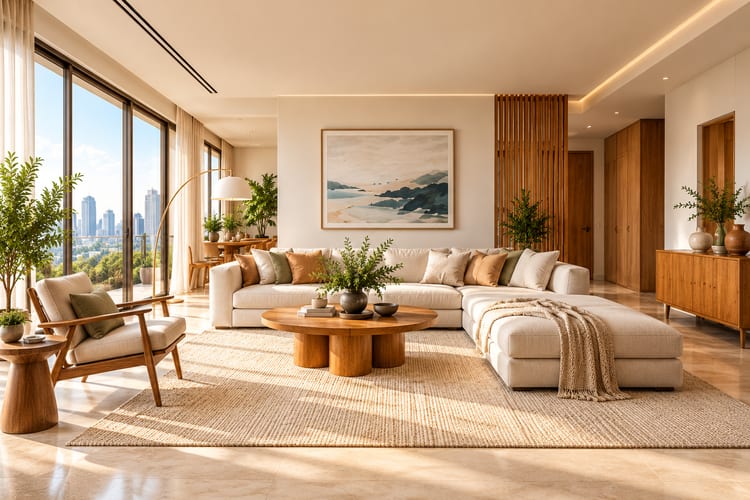
Scandinavian rooms are built around daylight. Walls stay white or pale grey, floors are light wood, and the furniture is simple, low and comfortable. Warmth comes from textiles rather than ornament: a chunky throw, a wool or jute rug, linen curtains.
- Colours: white, cream, soft grey, with muted sage or blue as accents
- Materials: light oak or ash, wool, linen, jute
- Furniture: clean-lined sofas, slim wooden armchairs, round wooden tables
Best for: Pune flats with limited natural light, and anyone who wants a calm, easy-to-maintain home.
2. Japandi: calm, natural and understated
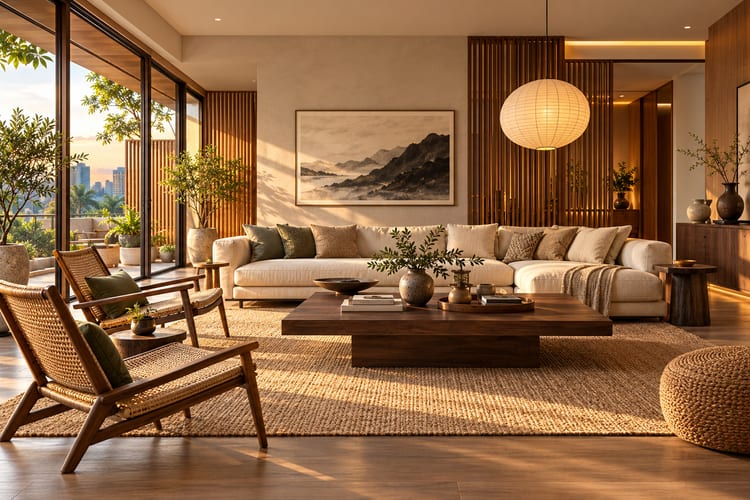
Japandi blends Japanese restraint with Scandinavian comfort. The palette is earthy and quiet, the furniture sits low, and every object earns its place. Craftsmanship matters more than quantity, so you will see handmade ceramics, woven seating and a lot of wood.
- Colours: warm beige, taupe, charcoal, deep brown
- Materials: dark and light wood, rattan, paper lanterns, stone
- Furniture: low sofas, slatted screens, woven chairs, solid wood tables
Best for: People who want a restful home with fewer, better things, especially bedrooms and living rooms.
3. Bohemian: layered, relaxed and personal
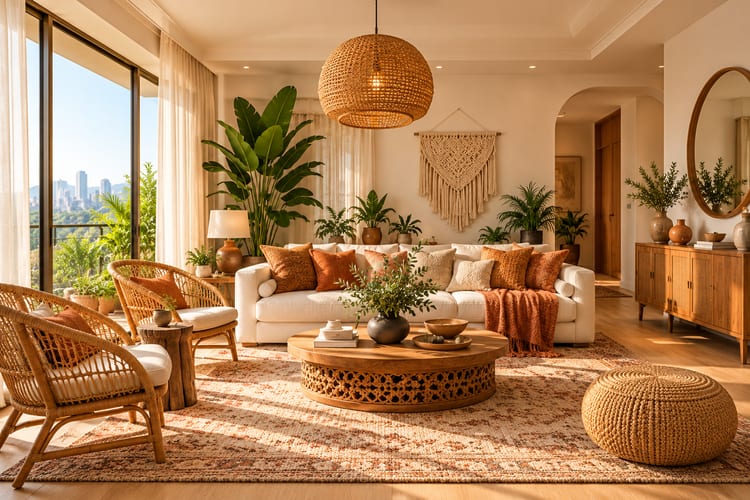
Bohemian style is about collecting rather than matching. Rooms are warm and layered, with patterned rugs, macramé, lots of plants and a mix of materials. It feels lived in and a little eclectic, but it still works best when you keep a common thread, such as terracotta and cream throughout.
- Colours: terracotta, rust, mustard, cream, earthy greens
- Materials: rattan, cane, jute, cotton, carved wood
- Furniture: rattan chairs, poufs, low carved tables, plenty of cushions
Best for: Creative households and anyone who likes a home that tells a story.
4. Mediterranean and coastal: airy, sunny and relaxed
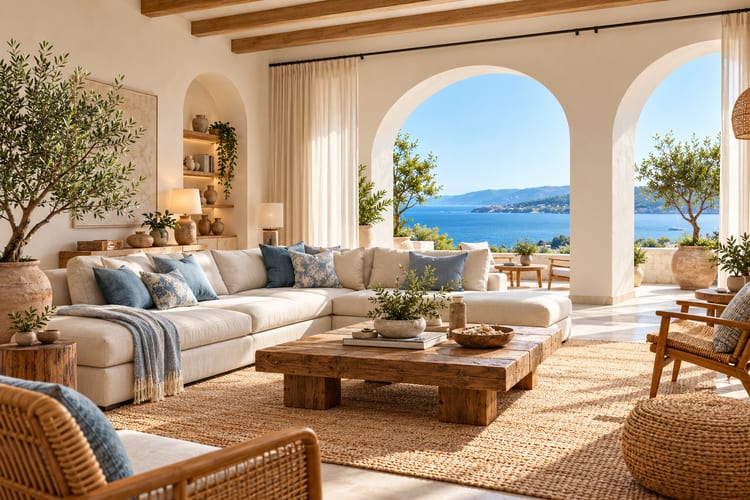
This style borrows from sea-facing homes: whitewashed walls, arched openings, exposed timber beams and views kept open. Blues come in through cushions and throws, while natural textures such as jute, rattan and raw wood keep the room grounded.
- Colours: white, sand, sea blue, olive green
- Materials: lime-washed plaster, reclaimed timber, terracotta, jute
- Furniture: deep, relaxed sofas, chunky wooden tables, woven seating
Best for: Villas, farmhouses and weekend homes with outdoor views and plenty of light.
5. Country: cosy, warm and welcoming
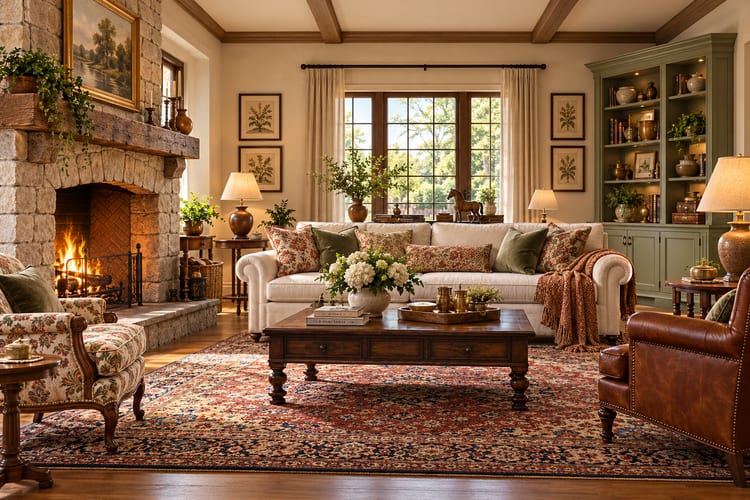
Country interiors feel collected over time. Stone or brick, a working fireplace, floral upholstery, framed botanical prints and a patterned rug make the room feel warm. Wood is visible and a little worn, and storage is open so favourite objects stay on display.
- Colours: cream, sage green, brick red, warm brown
- Materials: stone, solid wood, leather, chintz and woven fabrics
- Furniture: rolled-arm sofas, leather armchairs, wooden consoles, glass-fronted cabinets
Best for: Larger living rooms and family homes that are meant to be lived in and gathered around.
6. Mid-century modern: sculptural and confident
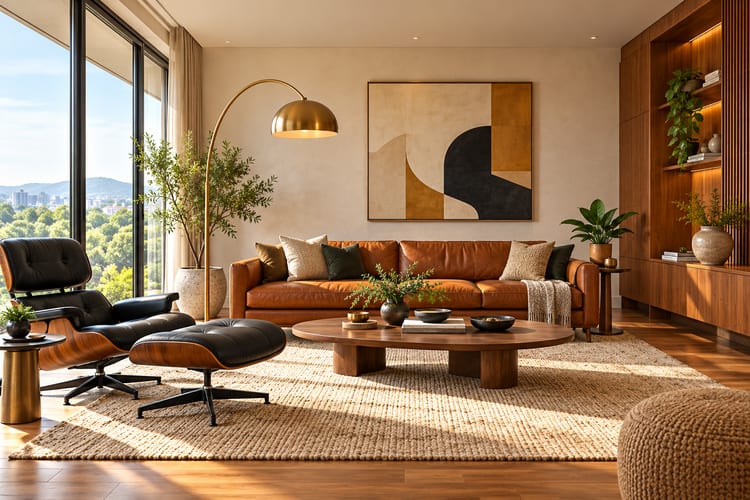
Mid-century modern comes from the 1950s and 60s and is built on good proportions. Furniture has tapered legs and clean curves, wood grain is celebrated, and colour appears in measured doses through leather, art and a single bold piece.
- Colours: walnut brown, tan leather, mustard, charcoal, cream
- Materials: walnut and teak veneers, leather, brass, moulded plywood
- Furniture: leather sofas, lounge chair with ottoman, arc floor lamps, oval coffee tables
Best for: People who love design classics and want a stylish room that is not fussy.
7. Industrial: raw, bold and urban
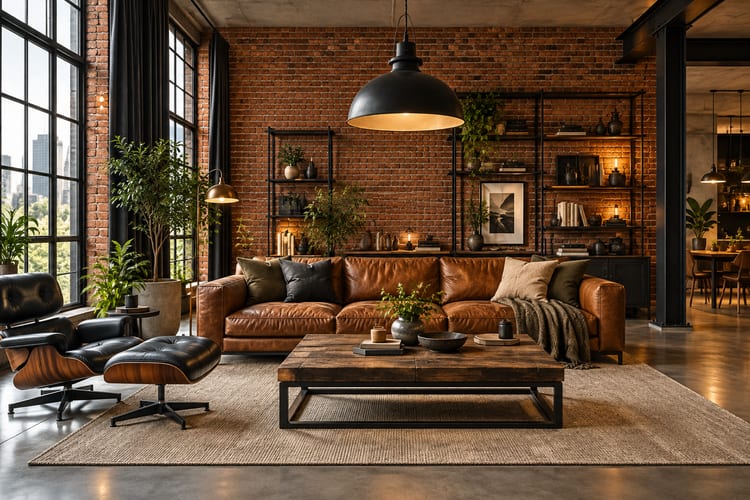
Industrial design leaves structure and materials visible: exposed brick, concrete floors, steel frames, big windows and metal pendant lights. Leather and wood soften the hardness and keep the room from feeling cold.
- Colours: brick red, charcoal, black, tan and cognac
- Materials: brick, concrete, black metal, reclaimed wood, leather
- Furniture: leather sofas, metal-framed shelving, plank-and-steel tables, dome pendants
Best for: Lofts, studios, cafés and offices, or a single feature wall in a home that wants an edge.
8. Colourful modern: playful but controlled
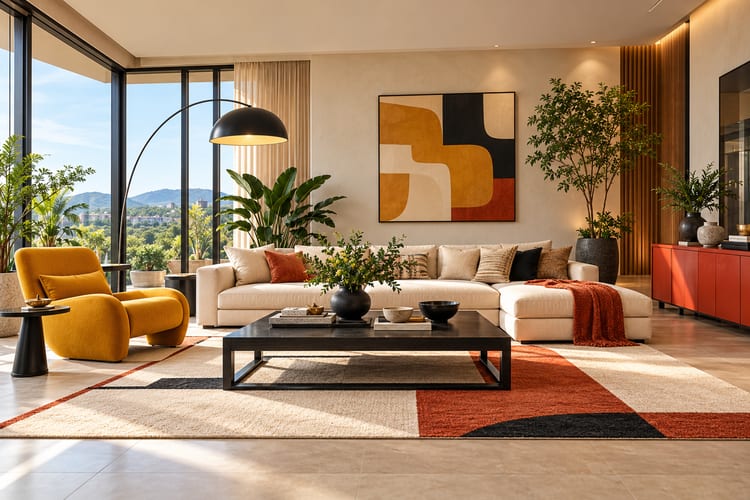
This is contemporary design with confident colour. A neutral base lets one or two strong shades do the work, usually in a rug, an accent chair or a storage unit. Geometric art and clean-lined furniture keep the look modern rather than busy.
- Colours: warm neutrals with rust, mustard, black and burnt orange accents
- Materials: stone or tile floors, wood slats, lacquered storage, wool rugs
- Furniture: low modular sofas, statement armchairs, simple black-framed tables
Best for: Anyone who finds minimal rooms too quiet but does not want a cluttered look.
9. Minimalist: warm, quiet and uncluttered
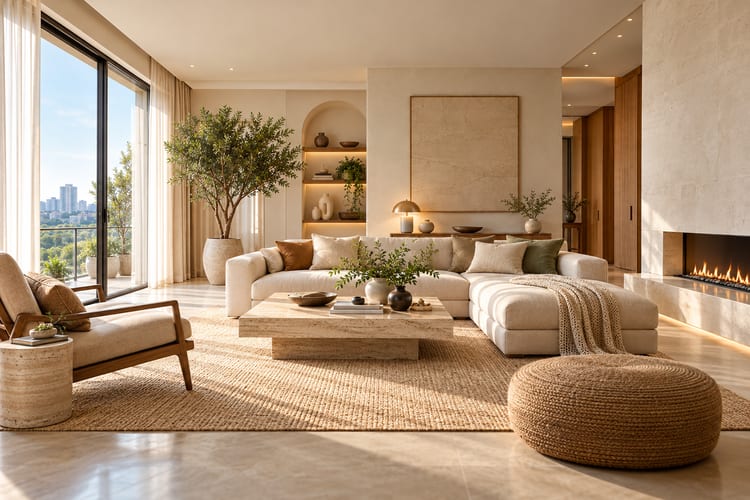
Minimalism today is soft rather than stark. Surfaces stay clear, colours stay within a narrow range and storage is built in, but natural stone, wood and woven textures keep it comfortable. A warm minimalist room feels like a spa more than a showroom.
- Colours: sand, ivory, oatmeal, pale wood tones
- Materials: travertine, limestone, light oak, bouclé, jute
- Furniture: low, plush sofas, stone-topped tables, built-in niches and concealed storage
Best for: Compact homes and busy households that want a calm, easy-to-tidy space.
10. Traditional and classic: formal, rich and timeless
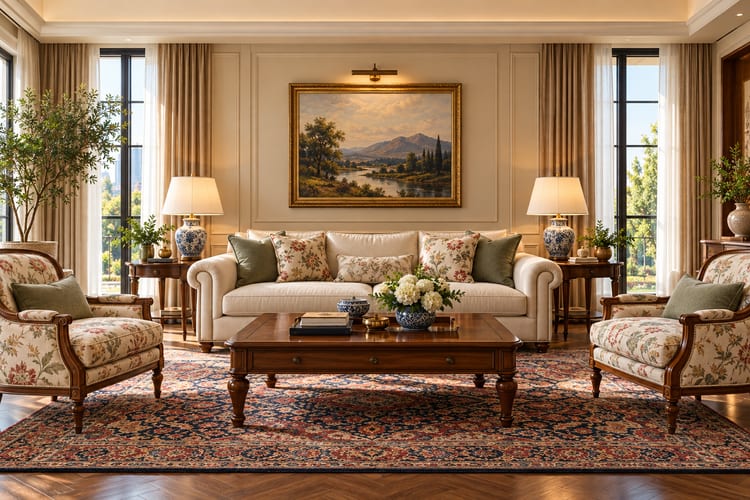
Classic interiors favour symmetry and refinement. Furniture comes in matched pairs, walls are panelled or softly moulded, and rich wood, brass and fine fabrics add depth. Table lamps with porcelain bases, framed landscapes and an oriental rug complete the picture.
- Colours: cream, gold, deep red, navy, soft green
- Materials: polished walnut, brass, silk and velvet, patterned wool rugs
- Furniture: rolled-arm sofas, wingback or floral armchairs, carved wooden tables, matching lamps
Best for: Formal living and dining rooms, and homes that suit heirloom furniture.
How to choose your style
- Start with how you live: a house with children and pets needs durable, easy-to-clean surfaces, whichever style you pick.
- Look at your light and space: small or dim rooms usually do better with Scandinavian, minimalist or coastal palettes than with dark industrial or classic ones.
- Collect references: save ten photos of rooms you like. The repeated colours and materials show your real preference.
- Respect the architecture: a loft suits industrial, an arched villa suits Mediterranean. Working with the building is cheaper than fighting it.
- Plan the budget early: built-in joinery, stone and custom furniture cost more than loose pieces. Our budgeting guide explains how to split spend.
Mixing styles
Few homes stay inside one style, and they do not need to. Pick one style as the base, around 70% of the room, and borrow accents from a second. A Scandinavian living room with a mid-century leather chair works well; so does a minimalist room with Japandi ceramics. The 70-30 rule is a handy way to keep the mix balanced.
How we help at Tryakshaay
We begin every project with a conversation about how you live and what you like, then build a palette, layout and material board before any work starts. If you are torn between two styles, we can show both in 3D so you can compare them in your own floor plan.
Style names and boundaries are loose, and designers use them differently. Treat this guide as a starting point for your own brief. The images are illustrative renders, not Tryakshaay projects.